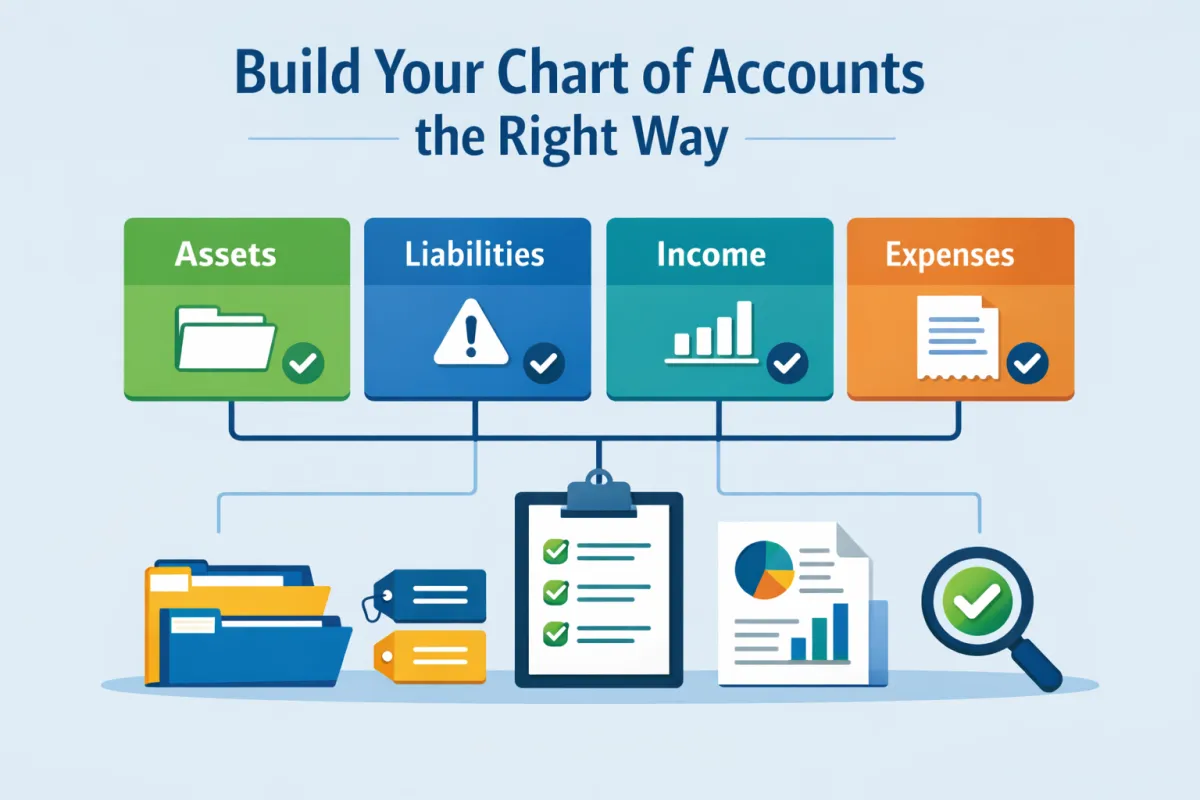
The Right Way to Build Your Chart of Accounts
Introduction
A chart of accounts (COA) is a vital component of any financial accounting system. It serves as a systematic listing of all account titles and numbers used to classify financial transactions. A well-structured COA is essential not only for accurate accounting but also for effective reporting. It lays the foundational framework that supports the analysis of a business's financial health. In this article, we’ll explore the importance of a COA, its key components, and provide a step-by-step guide for building and maintaining an effective chart of accounts.
Understanding the Chart of Accounts
Definition of COA
The chart of accounts is an organized list of all accounts that a business uses to record financial transactions. Each account typically has a unique number, making it easier to record and retrieve information regarding specific transactions.
Key ComponentsThe COA usually consists of five key components:
Assets: Resources owned by the business, such as cash, inventory, and equipment.
Liabilities: Obligations that the business owes to external parties, such as loans and accounts payable.
Equity: The owner’s interest in the business after liabilities are deducted from assets.
Income: Revenue generated from core business operations.
Expenses: Costs incurred in the process of earning revenue.
How COA Fits into Your Overall Accounting SystemThe COA integrates with your accounting system, providing a structured framework that supports the recording of all financial transactions, ensuring data consistency, accuracy, and ease of access.
Benefits of a Properly Structured COA
A properly structured COA offers numerous advantages:
Simplifies Financial Reporting and Analysis: With an intuitive layout, it becomes easier for you to generate financial statements and analyze data.
Makes Tax Preparation Easier: A well-organized COA helps ensure that all financial transactions are recorded accurately, simplifying tax reporting and compliance.
Helps Track Cash Flow, Profits, and Business Performance: By categorizing income and expenses logically, you can gain valuable insights into cash flow and profitability.
Reduces Errors and Misclassifications: A clear structure minimizes the risk of misclassifying transactions, ensuring accurate financial records.
Best Practices for Building Your COA
Keep It Simple and IntuitiveA simple and intuitive COA allows users to navigate it easily and reduces the likelihood of errors.
Use a Logical Numbering SystemImplementing a logical numbering system for accounts can enhance organization. For example, you might start asset accounts with the number 1, liabilities with 2, and so forth.
Group Similar Accounts TogetherOrganizing similar accounts together provides clarity and improves financial reporting. For instance, group all cash accounts under assets, and categorize all income sources under income accounts.
Limit the Number of Accounts to What’s NecessaryAvoid cluttering your COA with unnecessary accounts. Use only as many accounts as needed to effectively track your finances.
Consider Future Growth When Planning Account StructureAs your business grows, your COA might need to expand or adapt. Design your chart with flexibility in mind, allowing for new accounts as your business evolves.
Common Mistakes to Avoid
To maintain an effective COA, be aware of these common pitfalls:
Overcomplicating the COA: Avoid creating too many accounts, which can lead to confusion and inconsistency in financial reporting.
Misclassifying Income or Expense Accounts: Ensure you understand where each account fits within the COA to prevent incorrect financial statements.
Not Updating COA as the Business Evolves: Regularly review your COA to ensure it remains relevant to your business's current operations.
Step-by-Step Guide to Setting Up Your COA
Follow these steps to create an effective COA:
Determine the Main Account Categories: Identify the primary categories your business needs: assets, liabilities, equity, income, and expenses.
Break Down into Sub-Accounts as Needed: Further detail primary accounts into sub-accounts for more specific tracking. For example, under assets, you might include sub-accounts for cash, accounts receivable, and inventory.
Assign Account Numbers: Create a numbering system for all accounts, ensuring each one has a unique identifier that fits into your logical structure.
Review and Test for Accuracy: Once your COA is set up, review it thoroughly. Test the system by entering sample transactions to ensure everything flows smoothly.
Maintaining and Updating Your COA
To ensure your COA remains effective:
Regularly Review Accounts for Relevance: Schedule regular check-ins to assess whether your accounts are still necessary or need adjusting.
Remove or Merge Unused Accounts: Consolidate or remove accounts that are no longer in use to enhance clarity and reduce clutter.
Ensure Consistent Account Usage by Your Team: Train your team on the COA and promote consistent use across departments to avoid discrepancies in financial reporting.
Building and maintaining a well-structured chart of accounts is fundamental for effective financial management. By understanding the components and following best practices, you can create a COA that supports accurate accounting and robust reporting, ultimately leading to better financial decision-making for your business.
