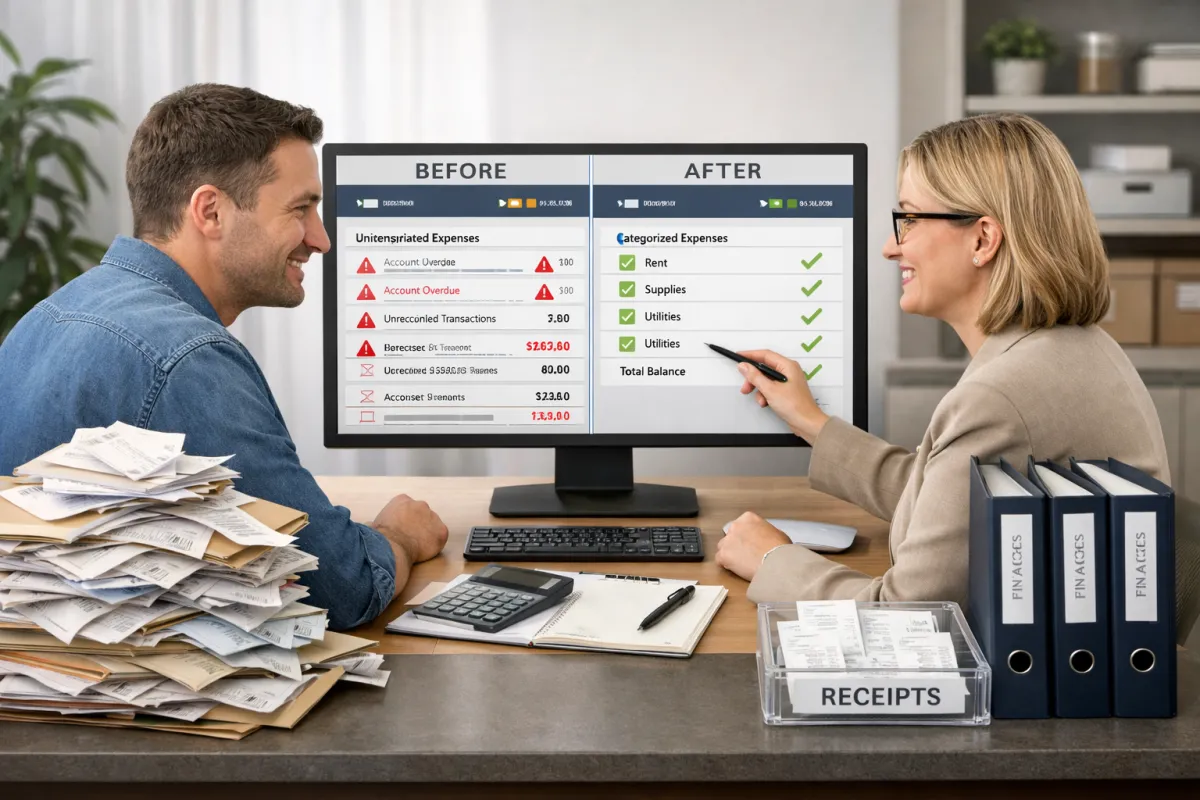
How We Clean Up 12–24 Months of Books Quickly
Introduction
Long-overdue books can result from various factors, including oversight, lack of resources, or simply the complexities of running a business. However, the risks associated with neglecting to clean up your financial records can be significant. Unmanaged books can lead to inaccurate reporting, compliance issues, and poor decision-making. A proper cleanup not only declutters your financial records but also restores clarity, enabling you to make informed decisions moving forward.
Understanding What a Bookkeeping Cleanup Includes
A comprehensive financial cleanup involves meticulous examination and adjustment of your bookkeeping records. During this process, we identify missing, duplicate, or incorrect data that can skew your financial reporting. It's important to note that a cleanup differs from regular bookkeeping; while regular bookkeeping focuses on current transactions, a cleanup addresses historical inaccuracies that have accumulated over time.
Step 1: Diagnose the Mess
The first step in our cleanup process is to evaluate the current state of your books. This involves reviewing unreconciled accounts, examining unmatched transactions, and identifying significant gaps in your records. By pinpointing major problem areas, we can efficiently prioritize what needs immediate attention before the actual cleanup begins. This diagnostic phase is crucial for setting a clear path forward.
Step 2: Declutter Your Books
Once we've diagnosed the issues, the next step is to declutter your books. This involves removing duplicates and incorrect entries, organizing transactions into the correct categories, and fixing any messy charts of accounts. Streamlining your bookkeeping structure enhances clarity and ensures a more manageable record-keeping system moving forward.
Step 3: Reconcile All Bank & Credit Card Accounts
The reconciliation process is vital for matching transactions with bank statements. During this step, we fix beginning balances, address any missing entries, and resolve discrepancies. Ensuring every account matches the bank accurately not only improves the integrity of your financial data but also lays the groundwork for accurate reporting.
Step 4: Rebuild Accurate Financial Reports
With clean and reconciled records, we move on to generating clear Profit & Loss and Balance Sheet reports. This step includes correcting any prior-period errors that could affect future tax filings. We ensure compliance with accounting standards and accuracy for future reporting, providing you with reliable insights into your financial health.
Step 5: Implement Systems to Keep Books Clean
To maintain clean books moving forward, we set up automation and rules that promote ongoing accuracy. Establishing a monthly reconciliation routine helps catch discrepancies early, while creating a structured approach prevents future cleanup issues. These proactive measures ensure that your bookkeeping remains organized and efficient.
How We Work Quickly Without Sacrificing Accuracy
Our process and workflow are designed for efficiency without compromising accuracy. We utilize various tools, templates, and review checklists that streamline the cleanup process. Quality control steps are built into our workflow, ensuring that we maintain high standards of accuracy throughout the cleanup. By balancing speed with meticulous attention to detail, we can effectively restore clarity to your financial records.
In conclusion, cleaning up 12–24 months of financial records might seem daunting, but with a structured approach, it is entirely achievable. By following these steps and implementing robust systems, you can ensure that your bookkeeping is both accurate and manageable, paving the way for better business decision-making in the future. If you have further questions or would like additional adjustments, feel free to let me know!
