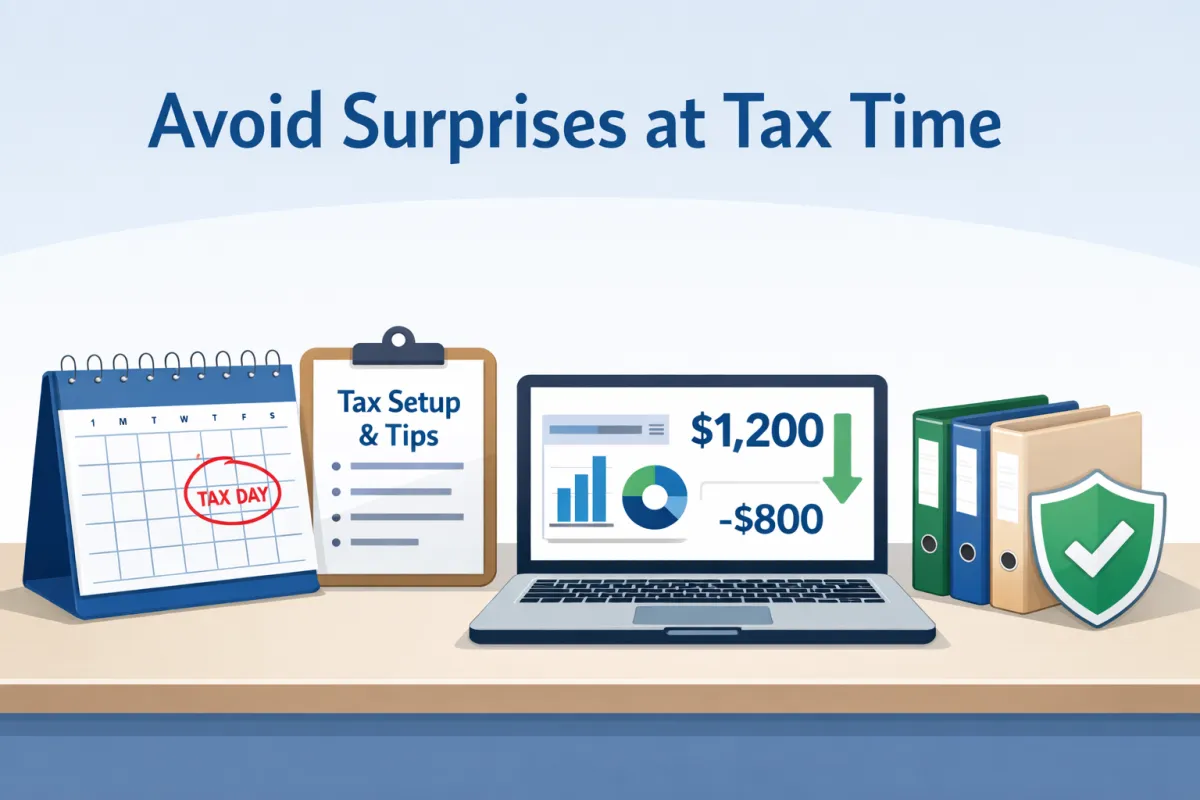
How a Proper Setup Saves Money at Tax Time
Introduction
Tax season can be stressful for small business owners, but a proper financial setup can make all the difference. An organized system not only streamlines the process but can also significantly reduce your tax bill. In this article, we’ll explore the importance of a well-structured financial setup and how it can help you navigate tax season with ease and confidence.
Common Tax Challenges for Small Business Owners
Many small business owners face several common tax challenges, primarily due to inadequate record-keeping and financial organization:
Unexpected Tax Bills: Poorly maintained records can lead to surprises at tax time, where business owners find themselves facing unexpected and often overwhelming tax bills.
Missed Deductions and Credits: Without accurate and organized records, you might overlook valuable deductions and credits available to your business.
Confusion Around Tax Deadlines and Reporting Requirements: Failing to keep track of deadlines and requirements can result in penalties and late fees, adding unnecessary financial strain.
How Proper Setup Reduces Your Tax Burden
A well-organized financial system is key to minimizing your tax burden in several ways:
Keeping Accurate Income and Expense Records: Consistent and accurate tracking of your finances ensures you have a clear overview of your income and expenditures, making it easier to file your taxes.
Categorizing Transactions Correctly: Proper categorization of your transactions helps maximize deductions. For instance, recognizing which expenses are deductible can lead to significant savings.
Tracking Deductible Expenses Throughout the Year: By monitoring your deductible expenses regularly, you can prevent last-minute scrambles at tax time and ensure you capitalize on all available deductions.
Benefits of Separating Personal and Business Finances: Maintaining separate accounts for your business and personal finances simplifies tracking and ensures you don't miss out on deductible business expenses.
Tax Strategies to Reduce Your Tax Bill
Implementing effective tax strategies can further reduce your tax liability:
Utilizing Available Tax Deductions and Credits: Familiarize yourself with the deductions and credits applicable to your business, and ensure you claim them to minimize your taxable income.
Planning for Estimated Taxes: Setting aside funds for estimated taxes throughout the year can help you avoid surprises and manage cash flow more effectively.
Retirement Contributions and Other Tax-Advantaged Strategies: Taking advantage of retirement accounts and other tax-advantaged options can provide immediate tax benefits while preparing for the future.
Timing Income and Expenses Strategically: Consider deferring income or accelerating expenses to reduce taxable income in a given year, allowing you to optimize your tax position.
Tools and Practices for Staying Organized
To keep your financial setup in check, consider implementing the following tools and practices:
Using Accounting Software: Invest in reliable accounting software that can accurately track your income and expenses, providing you with insights throughout the year.
Regular Reconciliation of Accounts: Frequently reconcile your accounts to ensure accuracy and catch discrepancies early on.
Maintaining a Clear Chart of Accounts: Develop a clear and organized chart of accounts that aligns with your business structure and helps you categorize transactions effectively.
Keeping Receipts and Documentation Organized: Organize and store receipts, invoices, and supporting documents for easy access when tax time arrives.
Working With Professionals
Recognizing when to seek professional help can lead to better financial outcomes:
When to Consult a Tax Advisor or Accountant: If you're unsure about tax laws or need assistance with complex tax situations, consulting a tax expert can provide clarity and assurance.
How Experts Can Identify Additional Ways to Reduce Your Tax Bill: Tax advisors can uncover opportunities you might not have considered, helping you take advantage of all available strategies.
Benefits of Proactive Planning Versus Reactive Tax Filing: Engaging with a professional throughout the year allows you to plan effectively, reducing the panic and potential errors that come with last-minute tax preparations.
In conclusion, taking the time to set up your financial systems properly can yield significant savings at tax time. By maintaining organized records, utilizing strategic planning, and considering professional guidance, you can navigate tax season with confidence and keep more money in your pocket. Embrace these practices, and transform tax time from a period of stress into an opportunity for financial clarity and optimization.
